Tax Planning for Small Business Owners Is my business big enough for tax planning?
Some planning moves help at any size. A few wait until profit is steady. Here's how to tell which ones fit you now.
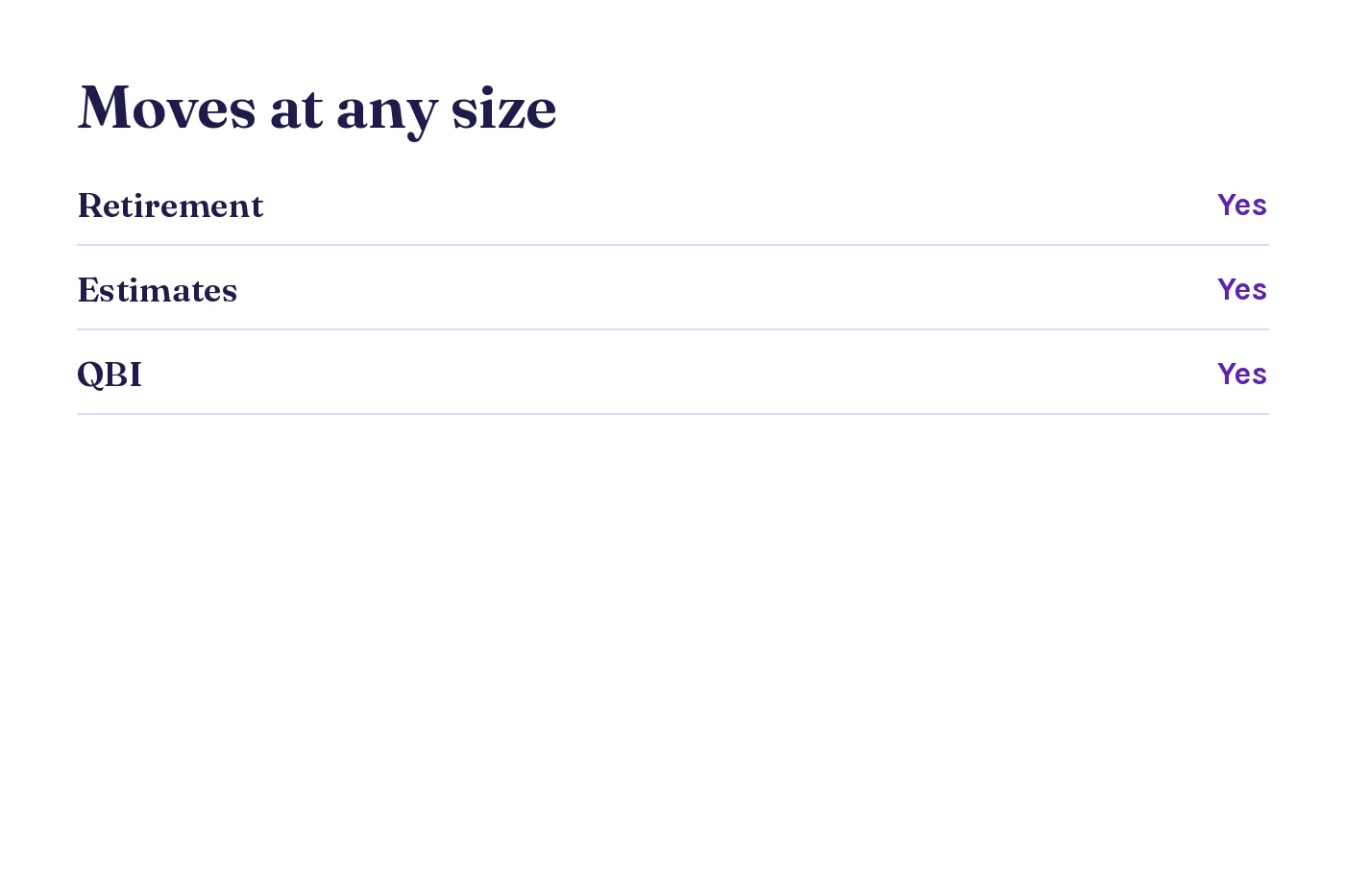
Moves that help at any size
A retirement plan. Even a few thousand dollars in a SEP IRA or a Solo 401(k) lowers this year's income tax. You choose the amount, so it scales with the business.
On-time estimates. Paying the safe-harbor amount on the four dates keeps the underpayment penalty off your bill, no matter how small the business is.
The QBI deduction. Many owners can deduct up to 20 percent of qualified business income. Below the income limits, small businesses usually qualify without extra rules.
Clean records of business costs. A home office, business mileage and the business share of your phone are deductions an owner of any size can take with good records.
Hiring your children. A sole owner whose child does real work can pay a fair wage, deduct it, and pay no Social Security or Medicare tax on it while the child is under 18.
Moves that usually wait for more profit
An S corp election usually waits until profit is steady and well above a fair salary for your work. Payroll fees plus the extra S corp return can take most of the tax difference until profit is higher. A C corporation usually waits until the business keeps profit in the company to grow. We look at both again each year as the business changes.
A quick way to tell
If your profit is under the cost of a fair salary for your job, start with the moves that help at any size. If profit is steady and well above that salary, the S corp election is worth running with your numbers. If something big is changing, like a first hire, a new location or a large purchase, plan before it happens, at any size.
A worked example
Here's an example with made-up numbers. A sole owner with $45,000 of profit puts $5,000 in a SEP IRA, pays estimates on time, and keeps a mileage log for 4,000 business miles. The SEP alone lowers her taxable income by $5,000, which in the 12 percent bracket is $600 less federal income tax, and the mileage is a deduction she'd lose without the log. An S corp election can wait. When profit grows, the plan grows with it.
If your year is simple
Some years don't need much planning. If the call shows that your year is simple and you're already using what fits, we'll tell you that, and you'll know what would make planning worth a second look. That way you spend money on planning when it pays.
Questions about small business tax planning
Do I need an accountant all year if I'm small? Not always. Many small owners do well with a plan at the start of the year and a check in October. If you want the books kept each month too, we price that first.
What do I need for the first conversation? Last year's return and a rough idea of this year's profit. That's enough for us to show you which moves fit.
Want to know which moves fit your business?
Tell us what the business does and roughly what it made last year.
You will be talking to the Steven Palmieri practice.