Tax Planning for Small Business Owners Quarterly estimated taxes for business owners
Four payments a year cover the tax that no paycheck withholds. Pay the safe-harbor amount on time, and the underpayment penalty doesn't apply.
Who has to pay estimates
You generally have to make estimated payments if you expect to owe $1,000 or more when you file your return. Most sole proprietors and partners do, because no one withholds tax from their business profit. S corp owners often do too, because tax withheld from a salary may not cover the tax on the rest of the profit.
The four due dates
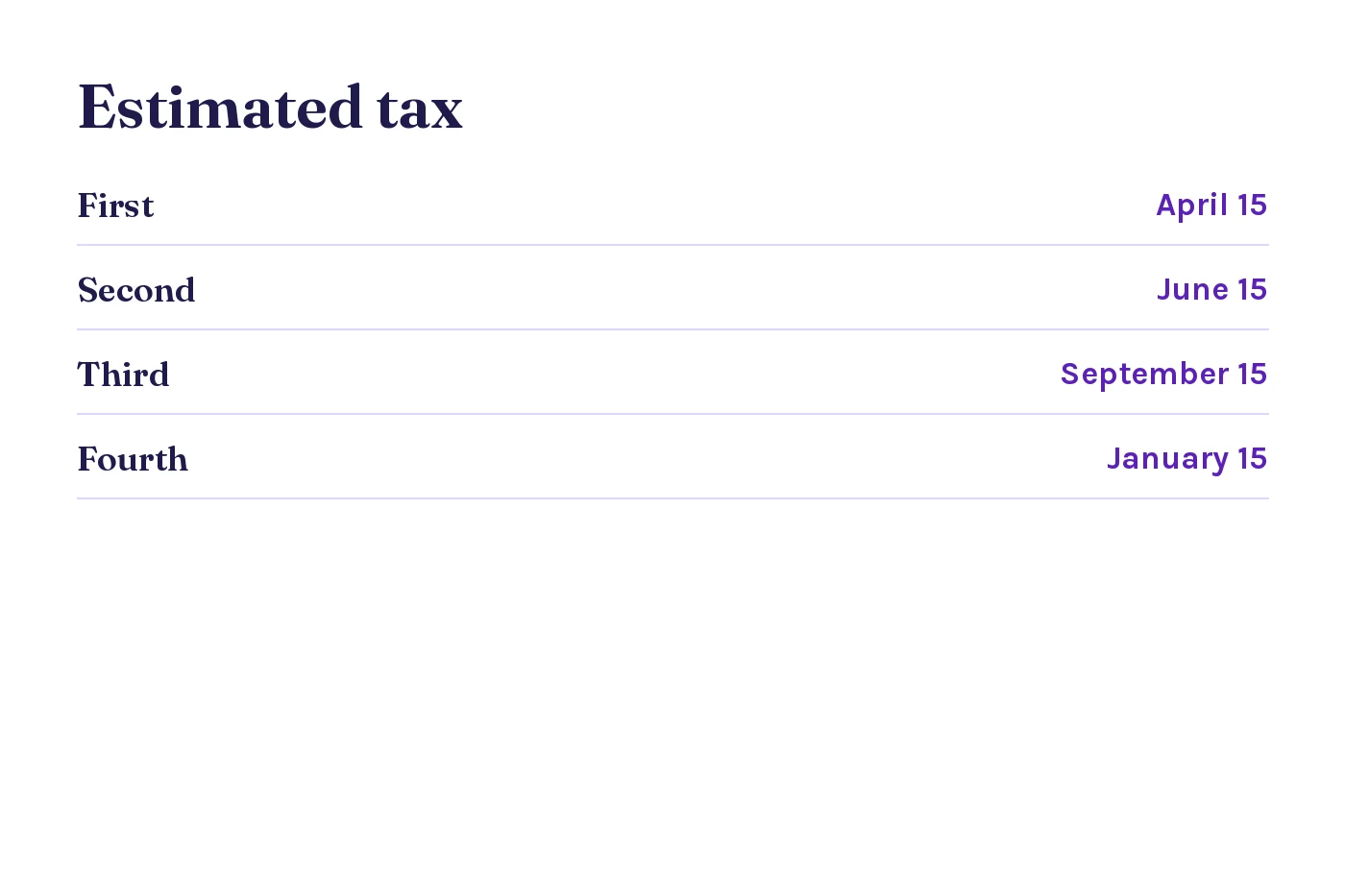
For a calendar-year taxpayer, the payments are due April 15 for income earned January through March, June 15 for April and May, September 15 for June through August, and January 15 of the next year for September through December. When a date falls on a weekend or a legal holiday, the payment is on time if it's made the next business day.
You pay with Form 1040-ES vouchers or online through your IRS account. Most owners find online payment easier to track.
The safe-harbor rule
You avoid the underpayment penalty if what you pay during the year, through estimates and withholding, is at least the smaller of two amounts: 90 percent of this year's tax, or 100 percent of the tax on last year's return. If last year's adjusted gross income was more than $150,000, or $75,000 if you're married filing separately, use 110 percent of last year's tax instead of 100 percent.
The last-year rule is the easy one to plan with, because you already know the number. It protects you from the penalty even if this year turns out much bigger. You'll still owe the rest when you file, so we help you set money aside for it as the year goes.
A worked example
Here's an example with made-up numbers. An owner's total tax on last year's return was $14,000, and last year's adjusted gross income was $110,000. To meet the safe harbor, she pays $14,000 during this year, which is $3,500 on each of the four dates.
If her adjusted gross income last year had been $160,000, the target would be 110 percent of last year's tax, or $15,400. That's $3,850 a payment. If this year's profit is running well above last year's, we also figure how much extra to set aside each month, so the April bill doesn't come as a shock.
How S corp withholding helps
If you're paid a salary from your S corp, federal income tax withheld from those paychecks counts toward the safe harbor. The IRS treats withholding as paid evenly through the year, even if most of it comes out in December. That gives you a late-year option: if you're short, you can raise the withholding on your last paychecks instead of making a larger January estimate.
If your busy season comes late
For a business that earns most of its profit in the fall, four equal payments ask for money before the profit exists. The annualized income method, on Form 2210, lets your payments follow your income, so a small first quarter means a small first payment. It takes good monthly books, which is one reason we keep the books current for clients.
Questions about estimates
What if I missed a payment? Pay it as soon as you can. The penalty works like interest on the late amount, so a short delay costs little. Later payments can also be raised to catch up.
Do state estimates follow the same dates? Many states use the same or similar dates, but not all. We add your state's dates to your plan.
Want us to figure your estimates?
Tell us roughly what last year's tax was and how this year compares.
You will be talking to the Steven Palmieri practice.