Tax Planning for Small Business Owners The mid-year tax check-in
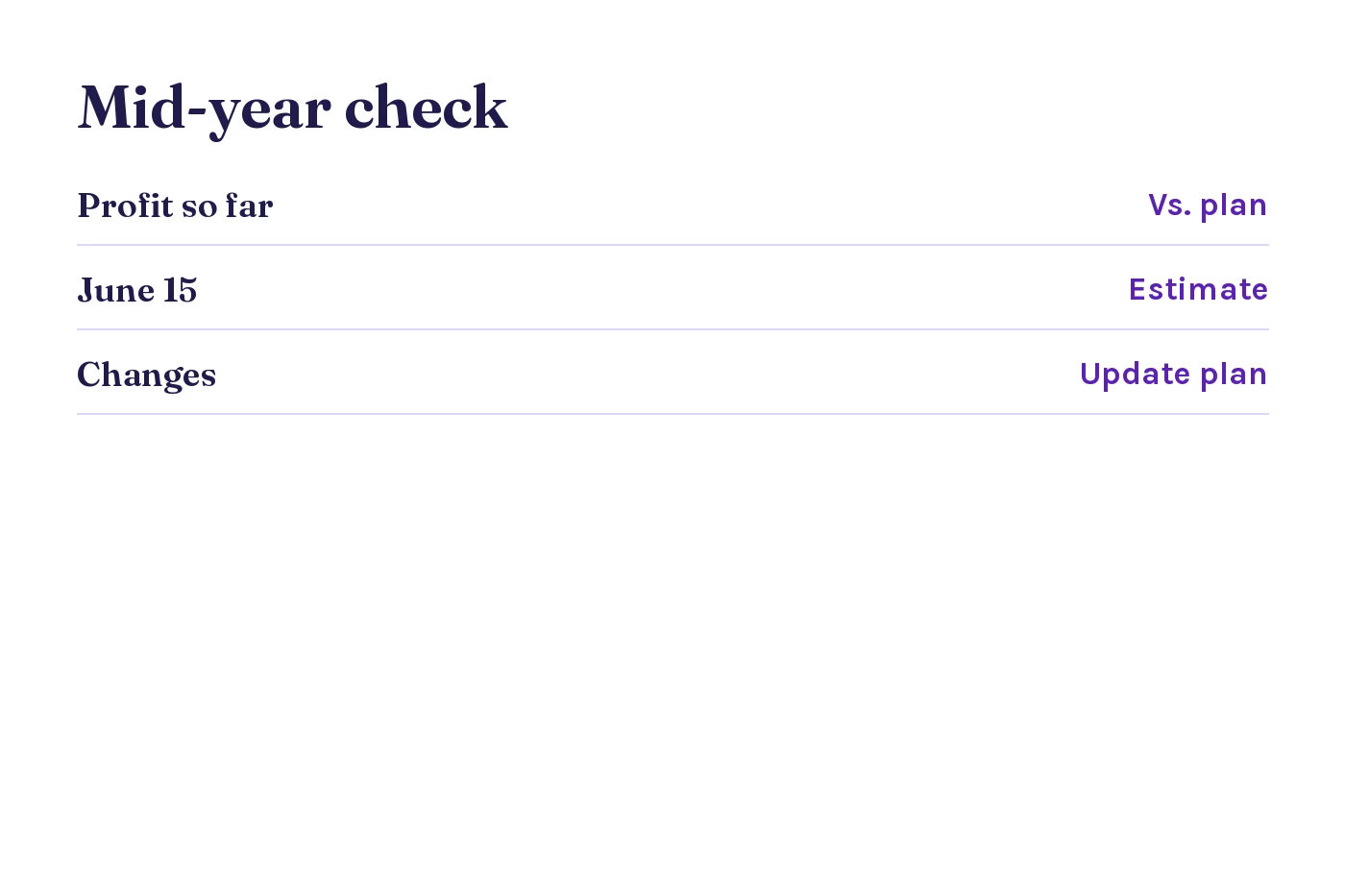
In May or June, compare the first months of the year with your plan. A change made now has the rest of the year to work.
Why check in mid-year
Your tax plan in January was built on a guess about the year. By late spring you have four or five months of real numbers. If the year is running ahead or behind, you can spread the adjustment over seven months instead of cramming it into December.
The check-in takes about half an hour with current books. It lines up with the June 15 estimate, so any change to your payments takes effect right away.
What to compare
Start with profit through April or May and compare it with the same months last year and with your plan. Then look at anything that changed the business: a new hire, a lost customer, a big purchase, a price change, or a new location. Any of these can move the year's profit, and with it the tax.
What you can adjust
The June 15 estimate. If profit is running higher, a larger payment now spreads the extra tax out. If you're using last year's tax as your safe harbor, you're protected from the penalty either way, but setting money aside still keeps April easy.
Your salary. If you're an S corp owner and the year is much bigger or smaller than planned, the salary may need to change to keep fitting your work. Adjusting it in June spreads the change across the remaining paychecks.
Retirement deposits. A better year may make room to raise your 401(k) deferrals. Raising them in June spreads the extra over more paychecks than waiting until fall.
Planned purchases. If the business needs equipment this year, the mid-year check is a good time to decide when to buy it and how to pay for it.
A worked example
Here's an example with made-up numbers. An owner planned for $100,000 of profit this year. Through May, profit is $55,000, which points to about $130,000 for the year. She raises her 401(k) deferral by $500 a paycheck for the rest of the year, and she adds $1,200 to her June and September estimates to cover more of the extra tax. Her plan for December now has less to do.
If your books aren't caught up yet
A mid-year check needs the months through April or May matched to the bank. If they aren't, catching them up comes first, and it usually takes less time than owners expect. We can do the catch-up and the check-in together. Our page on why tax planning starts with current books explains what current means.
Questions about the mid-year check
What if nothing changed? Then the check-in confirms the plan, and you keep going. That's a good result, and it takes ten minutes. Put the October review on the calendar while you're at it.
Is May too early to change my salary? No. It's a good time, because the change spreads across the most paychecks.
Want a mid-year check of your plan?
Tell us how the year is going so far compared with last year.
You will be talking to the Steven Palmieri practice.