
Tax Planning for Small Business Owners The planning moves that lower your tax, and when to make each one
Tax planning for small business owners comes down to a handful of decisions made on time: how the business is taxed, what you pay yourself, which retirement plan you use, and when you pay estimates and buy equipment. Below is each move, who it fits and when it happens. Then Steven Palmieri, a Tax CFO, builds your plan with you on a free 30-minute call.
Steven Palmieri, a Tax CFO and the Entrepreneur's CFO, builds your tax plan with you and keeps it up to date all year.
Get a free tax plan for your business.
Tell us a little about the business. We'll reply, and you can pick a time for the free 30-minute call.
You will be talking to the Steven Palmieri practice.
How tax planning works for a business owner
Tax preparation records the year after it ends. Tax planning makes the decisions while they can still change your bill. A Tax CFO keeps your books current, checks your plan each quarter, and tells you which move is due next and what it's worth.
Choose how your business is taxed
Sole owner, partnership, S corp or C corp. The right setup depends on your profit and where the business is headed.
Click to see the choices ›Tap to see the choices ›

Set your owner salary
In an S corp you pay yourself a fair wage through payroll. The rest of the profit can come out as distributions.
Click to see how salary works ›Tap to see how salary works ›

Put profit into a retirement plan
A Solo 401(k) or a SEP IRA can keep tens of thousands of dollars out of this year's income tax.
Click to compare the plans ›Tap to compare the plans ›
Keep your QBI deduction
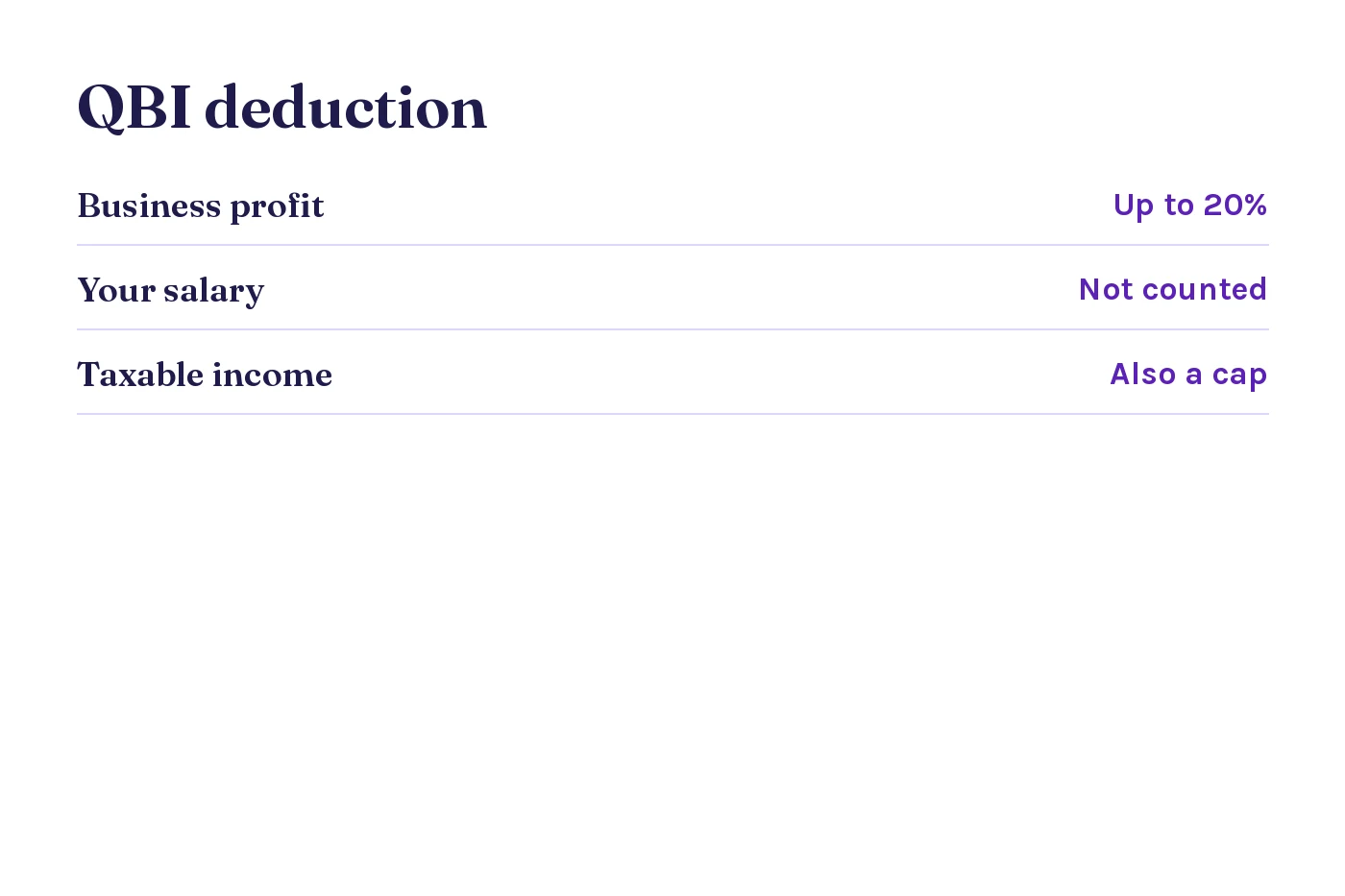
Many owners can deduct up to 20 percent of business profit. Your salary and your income change the amount.
Click to see the QBI math ›Tap to see the QBI math ›
Pay estimates on time
Four dates a year, and a safe-harbor rule that keeps you clear of the underpayment penalty.
Click to see the dates ›Tap to see the dates ›
Make your year-end moves
Equipment, bills and retirement deposits that count this year if they're done by December 31.
Click to see what still counts ›Tap to see what still counts ›
Get paid back for business costs
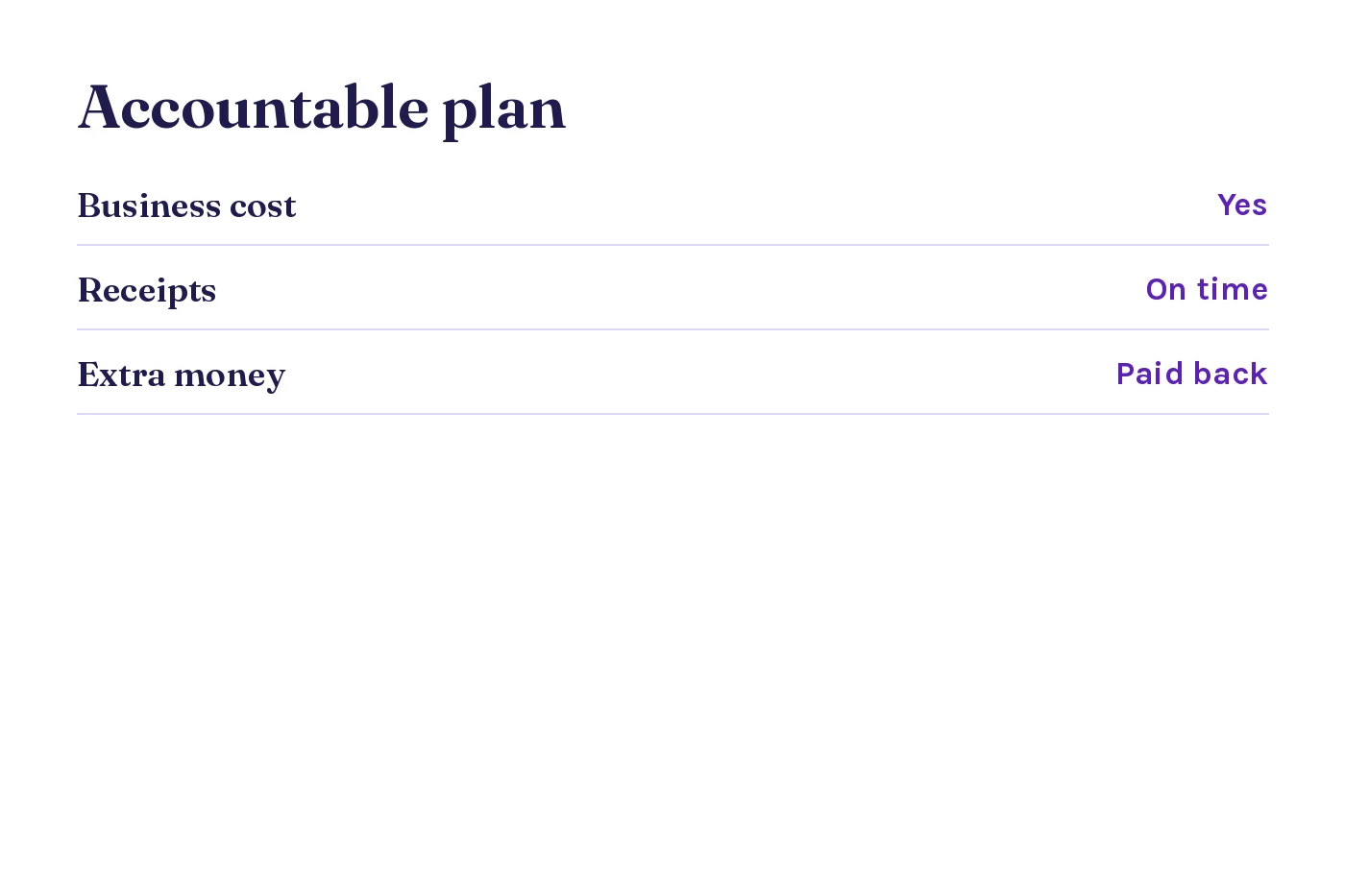
An accountable plan lets your company repay your home office, phone and mileage with no payroll tax.
Click to see how it works ›Tap to see how it works ›
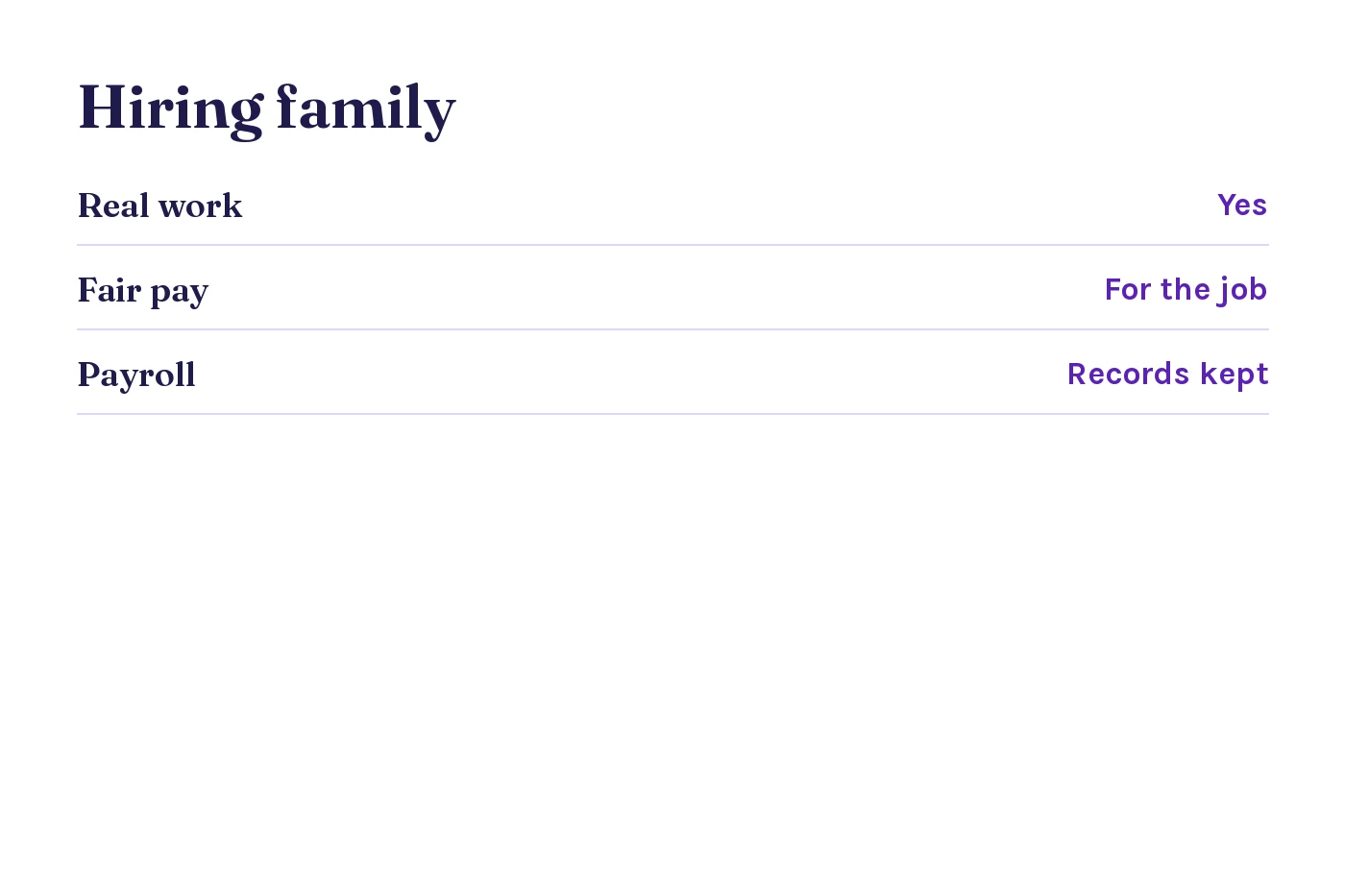
Hire your kids or spouse
Real work at fair pay can move income to a family member in a lower bracket.
Click to see the rules ›Tap to see the rules ›
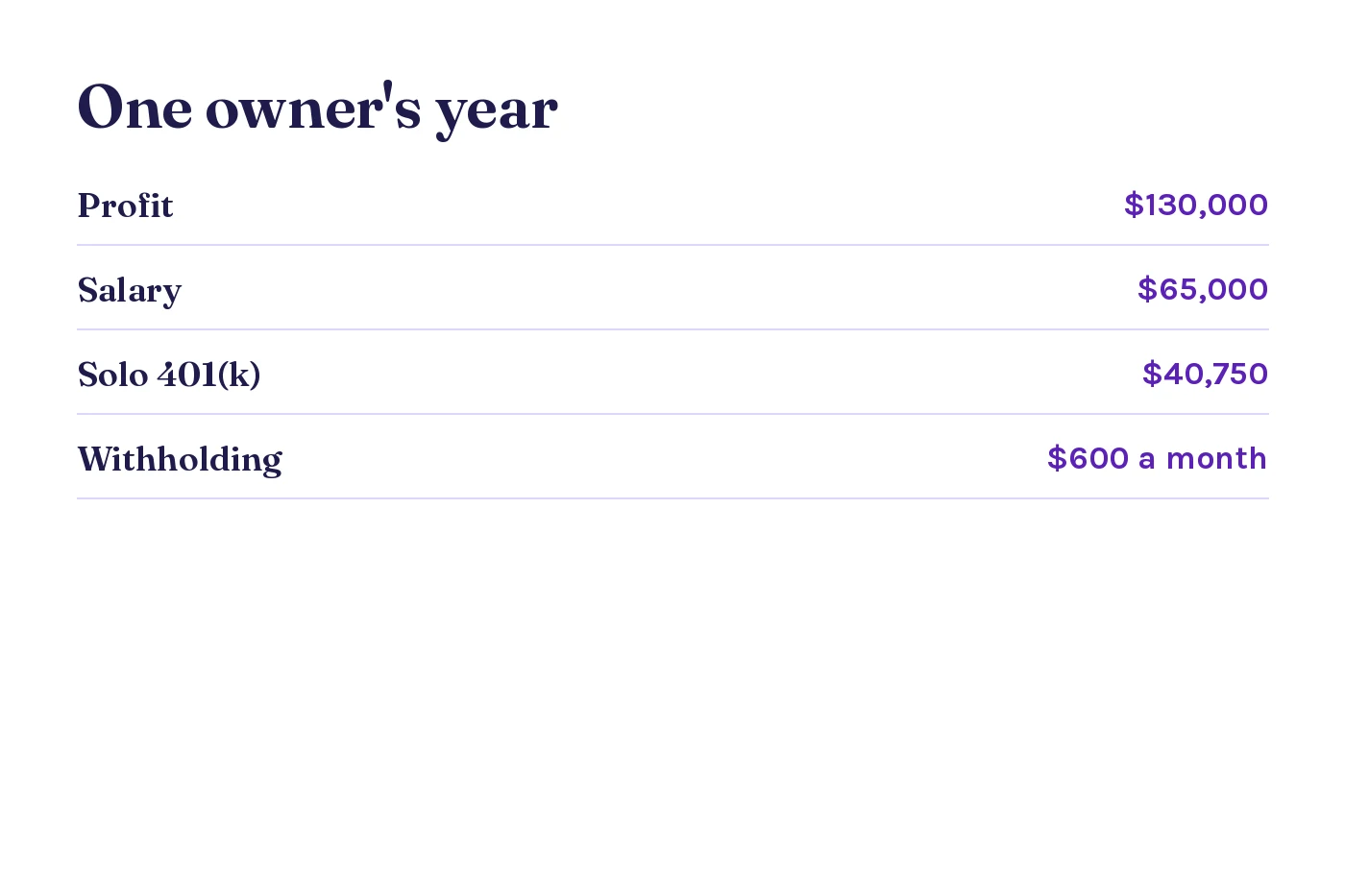
See one owner's year, worked out
A made-up consultant with $130,000 of profit, and what a salary, a Solo 401(k) and an accountable plan do for her year.
Click to see the example ›Tap to see the example ›
Six planning moves, and who each one fits
Open a card to see the move, the owner it usually fits, and how we help you make it.
1Your company is taxed the default way
An owner with a one-owner LLC and steady profit
An S corp election can lower Social Security and Medicare tax once profit runs well above a fair salary for your work. We run both ways with your numbers before you file Form 2553.
2You pay yourself with draws
An S corp owner who hasn't started payroll
Pay for your work goes through payroll as a wage. Profit beyond that wage can be paid out to you as a distribution. We help you pick a salary that fits your role, and we get payroll running with your provider.
3There's no retirement plan yet
An owner who wants to keep more of a good year
A Solo 401(k) or a SEP IRA moves part of this year's profit out of this year's income tax. We help you pick the plan and an amount your cash can carry.
4Your estimates are a guess
An owner whose income jumped this year
Pay at least last year's tax across the four dates (110 percent if last year's adjusted gross income was over $150,000), and you generally avoid the underpayment penalty. We figure each payment with you.
5You pay business costs yourself
An S corp owner with a home office, a phone and a car
An accountable plan lets the company pay you back with no payroll tax and deduct the cost. We set up the plan and a simple monthly routine.
6Your kids help out at work
A sole owner whose teenager works real hours
Fair pay for real work is a business deduction. A child under 18 who works for a parent's sole proprietorship owes no Social Security or Medicare tax on that pay. We set up the payroll and the records.
Tell us about your business, and we'll build your plan with you.
A few lines is plenty: what the business does, how it's set up, and roughly what it made last year. There's no charge, and it lasts 30 minutes.
You will be talking to the Steven Palmieri practice.
The eight planning moves, and when each one fits
1. Choose how the business is taxed. By default, an LLC with one owner files on Schedule C with your personal return, and every dollar of profit pays Social Security and Medicare tax as self-employment tax. Electing S corp status changes that: you pay yourself a salary, and only the salary carries those taxes. The election usually fits once profit is steady and well above what your job would pay at another company. You file it on Form 2553, no more than 2 months and 15 days into the year it takes effect. For a calendar-year company that's March 15.
2. Set your owner salary. Once you're an S corp, pick a salary that fits the work you do and run it through payroll from the first month. Every $10,000 of salary carries about $1,530 of Social Security and Medicare tax, half paid by the company and half withheld from your check. Profit above the salary can come out as distributions without those two taxes. We help you set a figure you can back up with what similar work pays.
3. Pick a retirement plan early, and fund it as you go. A business with no employees other than the owner and a spouse can use a Solo 401(k). In 2026 you can put in up to $24,500 of your own pay, $8,000 more at age 50 or older, and an S corp can add up to 25 percent of your salary. The total can't go over $72,000 before catch-up amounts. A SEP IRA is simpler, and you can open and fund it as late as your business return's due date, extensions included.
4. Plan around the QBI deduction. Many owners of sole proprietorships, partnerships and S corporations can deduct up to 20 percent of their qualified business income. Your S corp salary doesn't count toward it, so a higher salary means a smaller deduction. Above an income level the IRS sets each year, more limits apply, especially to service businesses. That's why we set the salary, the retirement deposit and the QBI deduction together.
5. Pay estimated taxes on the four dates. The four payments are due April 15, June 15 and September 15 of the tax year, then January 15 of the next. You stay clear of the underpayment penalty if you pay the smaller of 90 percent of this year's tax or 100 percent of last year's. Owners whose adjusted gross income topped $150,000 last year use 110 percent of last year's tax. Federal income tax withheld from an S corp paycheck counts toward the total.
6. Set up an accountable plan. If your company is an S corp or a C corp and you pay business costs out of your own pocket, an accountable plan lets the company pay you back. The cost has to be for the business, you report it with records within a reasonable time, and you return anything you were paid beyond the cost. When those rules are met, the payment isn't wages, so it carries no payroll tax, and the company deducts it.
7. Hire family for real work. In a sole proprietorship, or a partnership owned only by a child's parents, pay to a child under 18 carries no Social Security or Medicare tax, and pay to a child under 21 carries no federal unemployment tax. A corporation, including an S corp, pays those taxes on a child's wages like anyone else's. Either way, fair pay for real work is a business deduction, and a child can use the standard deduction against it.
8. Time income and purchases near year end. Equipment the business needs, bought and in use by December 31, can often be deducted in full this year. The IRS says the 100 percent first-year deduction is permanent for qualified property acquired after January 19, 2025, and the Section 179 limit is $2,500,000 for 2025, with yearly inflation increases after that. If you use the cash method, a real business bill you pay in December counts this year. Buy only what the business needs, because a deduction never covers the whole cost.
A worked example: one owner's year
Here's an example with made-up numbers. A consultant runs a one-owner LLC, files single, has no other income, and expects $130,000 of profit in 2026 before paying herself. Left on Schedule C, about $18,370 of that profit would go to self-employment tax.
Once the LLC files as an S corp, she draws a $65,000 salary through payroll. Social Security and Medicare on that wage come to $9,945, roughly $8,425 below the Schedule C figure. Payroll fees, a separate S corp return and a smaller QBI deduction take back part of that, and we price those with her before she files.
Her salary also opens a Solo 401(k): $24,500 deferred from her paychecks, and $16,250 from the company, which is 25 percent of the wage. Putting away $40,750 trims her federal taxable income by about $37,500 once the QBI change is counted. All of that sits in her 22 percent bracket, so she keeps roughly $8,250 of federal income tax this year, and pays tax on the money when she withdraws it in retirement.
The full example, with how she covers her estimates, an accountable plan and a December equipment purchase, is on the worked tax planning example. Your numbers will be different. On the call, we run the same steps with yours.
Your planning calendar, month by month
January to March. Pick your salary for the year and get the first payroll running. Pick the retirement plan and how much of each paycheck goes in. Set up the accountable plan. If you want S corp status for this year, file Form 2553 by March 15.
April 15. File your personal return or an extension, pay the first estimate for this year, and make any IRA deposit for last year.
May and June. Compare the first months of the year with the plan. If profit is running higher or lower, change the June 15 estimate, the salary or the retirement deposits now, while there are months left to spread the change.
September and October. Pay the September 15 estimate. Then forecast the year to December 31 and pick the year-end moves: equipment you need, bills to pay, and what's left to put in the retirement plan through payroll.
December 31. Payroll deferrals into a 401(k), equipment placed in service, and most timing moves have to be done by this date.
After the year ends. The fourth estimate is due January 15. A SEP IRA can still be opened and funded up to the business return's due date, including extensions. Then the plan for the new year starts.
What you get from the free 30-minute call
Steven Palmieri looks at last year's return and your numbers so far this year with you. You hear which of the eight moves fit your business, which ones you already use, and which ones still count this year.
You leave with the next two or three steps and the dates they're due. If you want help after that, you see the price first, as a monthly retainer or a fixed-fee project. Most owners on a retainer get the books, the plan and the return from the same practice.
Bring last year's return if you have it, and access to your books. A rough idea of this year's profit is enough to start. If the books are behind, we can help you catch them up so the plan uses real numbers.
Questions owners ask before they book
Is my business big enough for tax planning? Most owners can use some of these moves at any size, such as a retirement plan, on-time estimates and the QBI deduction. The S corp election usually waits until profit is steady. Tax planning for a small business walks through which moves fit at which size.
Is it too late to plan this year? Rarely. Equipment, retirement deposits through payroll and timing moves can still be made until December 31, and a SEP IRA can be funded after that. The page on year-end tax moves lists what still counts.
Do I need a company first? No. Sole owners use most of these moves too. If a company would help, we talk through which kind and when to form it.
How is this different from my tax preparer? A preparer files what already happened. We plan the year with you before it ends and keep your books current so the plan uses real numbers. If you like your preparer, we can work alongside them.