Tax Planning for Small Business Owners Year-end tax moves you can still make
Late in the year there are still real moves left. Most have to be done by December 31, and a few can wait until you file.
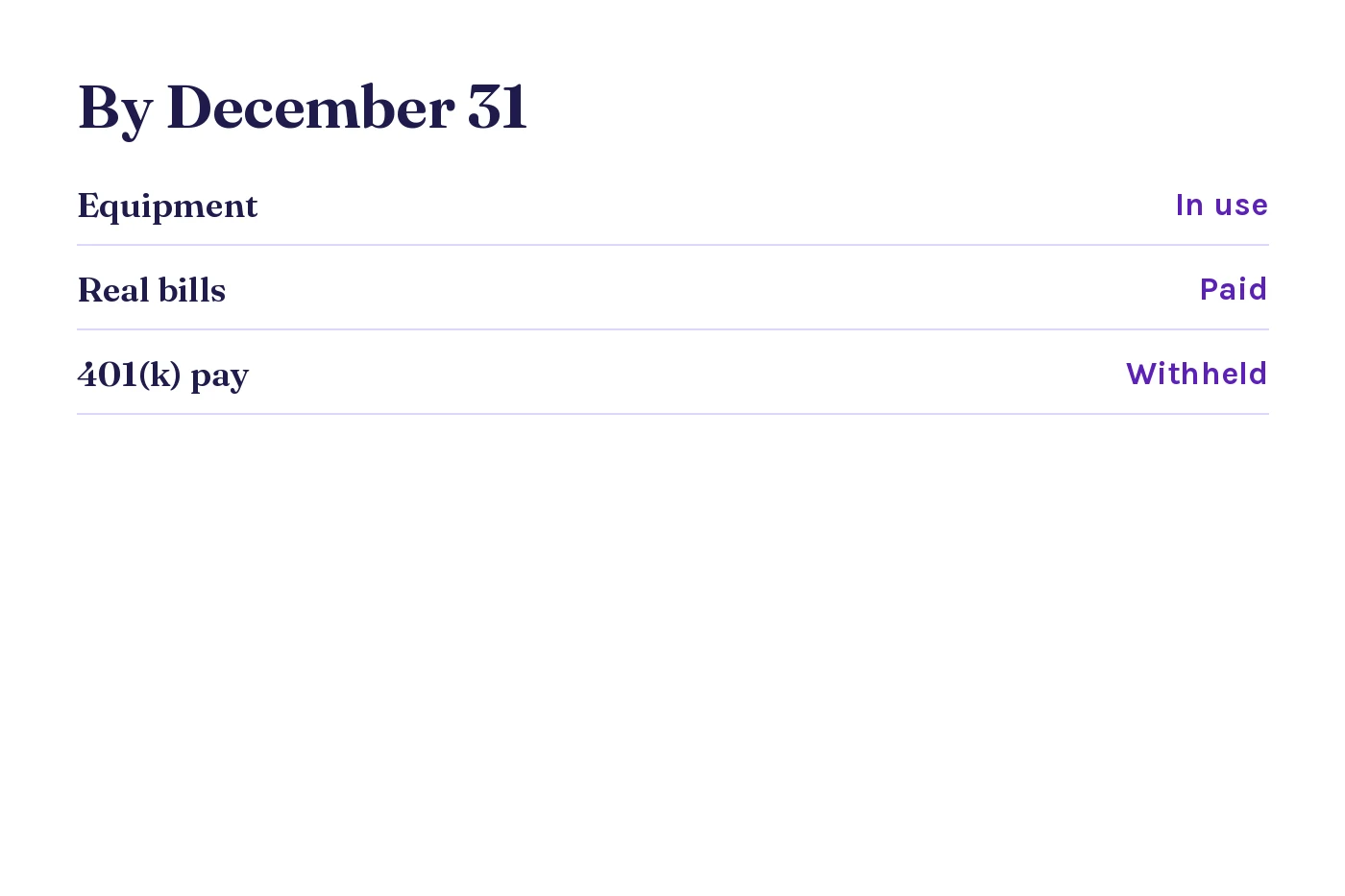
Moves that must be done by December 31
Buy and start using equipment the business needs. Equipment, vehicles and software that are bought and placed in service by December 31 can often be deducted in full this year. The IRS says the 100 percent first-year deduction is permanent for qualified property acquired after January 19, 2025. The Section 179 limit is $2,500,000 for 2025, with yearly inflation increases after that.
Finish your 401(k) deferrals. Money from your own pay has to be withheld from paychecks by December 31. If you're an S corp owner, the last payrolls of the year are your last chance to defer more.
Pay real business bills. If you use the cash method, a business expense you pay in December is deducted this year. This works for costs that belong to this year, like supplies, repairs and services. IRS rules limit how far ahead you can prepay.
Settle the accountable plan. Submit your reports for home office, phone and mileage costs, and get reimbursed by the company before year end.
Finish the salary. If your S corp salary for the year is short of the plan, the last payrolls are the place to fix it.
Timing income
If you use the cash method, income counts in the year you receive it. If you normally bill at the end of the month, sending December's invoices on your usual schedule can mean some payments arrive in January and count next year. That only helps if next year's tax rate is the same or lower, so we check the forecast first.
The opposite move helps too. If this year is unusually slow and next year looks bigger, collecting what you can before December 31 puts that income in the lower year.
Moves that can wait until you file
A SEP IRA can be opened and funded up to your business return's due date, extensions included. The employer share of a Solo 401(k) can be paid by the same date. An IRA deposit for the year can be made until the April filing deadline. The fourth estimated payment is due January 15.
A worked example
Here's an example with made-up numbers. In early December an owner expects $140,000 of profit. She was going to buy a $12,000 piece of equipment in January. Buying it and putting it to work in December lowers this year's taxable profit by $12,000 instead of next year's. She also adds $3,000 to her last two paychecks' 401(k) deferrals. Together, that keeps $15,000 out of this year's income. She still pays $12,000 for the equipment, so the move makes sense only because the business needed it.
What's harder late in the year
An S corp election for this year has usually passed by fall, unless the company qualifies for late-election relief. A new SIMPLE IRA for this year had to be set up by October 1. These are good to plan for next year, and the call is a good time to start.
Questions about year-end planning
Is December too late to call? No. The moves above still count. A call in October or November just leaves more room to plan them well.
Should I buy equipment just for the deduction? Only if the business needs it. A deduction saves part of the cost, never all of it.
Want help with your year-end moves?
Tell us your expected profit this year and any purchases you're thinking about.
You will be talking to the Steven Palmieri practice.