Tax Planning for Small Business Owners An October tax planning agenda
From October to April, a small business has a handful of federal dates. Here's each one, what it's for, and what to plan before it.
The dates from October to April
These are the usual federal dates for a calendar-year business and its owner. The IRS pushes any of these deadlines to the following workday when it falls on a weekend or a legal holiday.
October 15. Extended personal returns are due. If you extended, a SEP IRA for last year can still be funded up to this date when you're a sole proprietor.
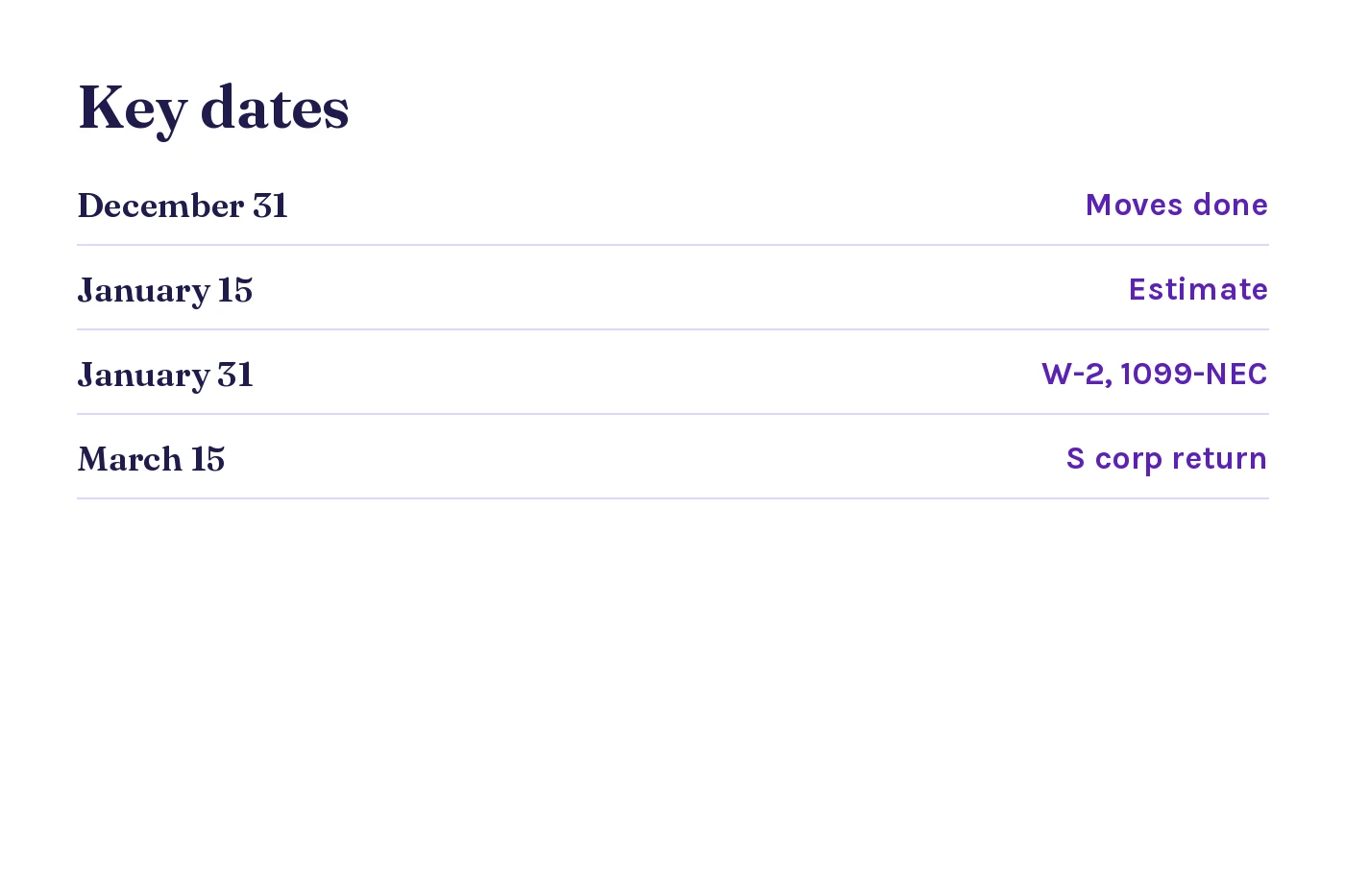
December 31. The last day for most year-end moves: equipment placed in service, 401(k) deferrals from your pay, bills paid under the cash method, and accountable plan reimbursements.
January 15. The fourth estimated payment for the year just ended.
January 31. W-2s go to employees, including you if you're on S corp payroll, and Form 1099-NEC goes to most contractors you paid during the year. Both are also filed with the government by this date.
March 15. S corp returns on Form 1120-S and partnership returns on Form 1065 are due, or an extension. It's also the deadline for Form 2553 if you want S corp status for the new year.
April 15. Personal returns are due, or an extension. The first estimate for the new year is due, and so is any IRA deposit for the year just ended.
What to plan in October
Use October to line up the December 31 moves. Forecast profit to year end, check your salary and 401(k) deferrals against the plan, and list the equipment the business needs. The step-by-step version is the October tax planning checklist.
What to plan for January
Size the January 15 estimate from what you've paid so far, and collect contractor details now so the 1099-NEC forms aren't a scramble. If you're an S corp owner, check that your W-2 will show the full-year salary. Health insurance the S corp paid for you also belongs on that W-2, so tell us about it before the last payroll.
What to plan for March
If this year showed that an S corp election would help, file Form 2553 by March 15 so it counts for the new year, and set up payroll to start in January. The page on choosing how your business is taxed explains when the election fits.
Questions about the calendar
What if my business uses a fiscal year? The dates move with your year. We put your own dates on your plan.
Do states use the same dates? Many states follow the federal dates, and some don't. We add your state's dates to the plan.
Want your dates on one plan?
Tell us how the business is set up and whether you have employees or contractors.
You will be talking to the Steven Palmieri practice.