Tax Planning for Small Business Owners What tax planning means for a business owner
Tax planning is deciding, before the year ends, how your business is taxed, how you're paid, and when you pay and spend, so you owe less legally.
Planning and preparation are two different jobs
Tax preparation happens after the year ends. Your preparer records what happened and files the return. By then, most decisions that could have lowered the bill are already locked.
Tax planning happens during the year. It looks at your profit as it comes in and picks the moves that fit: the entity, the salary, the retirement plan, the timing of purchases, and the size of your estimates. Both jobs matter. The planning just has to come first.
What a written tax plan includes
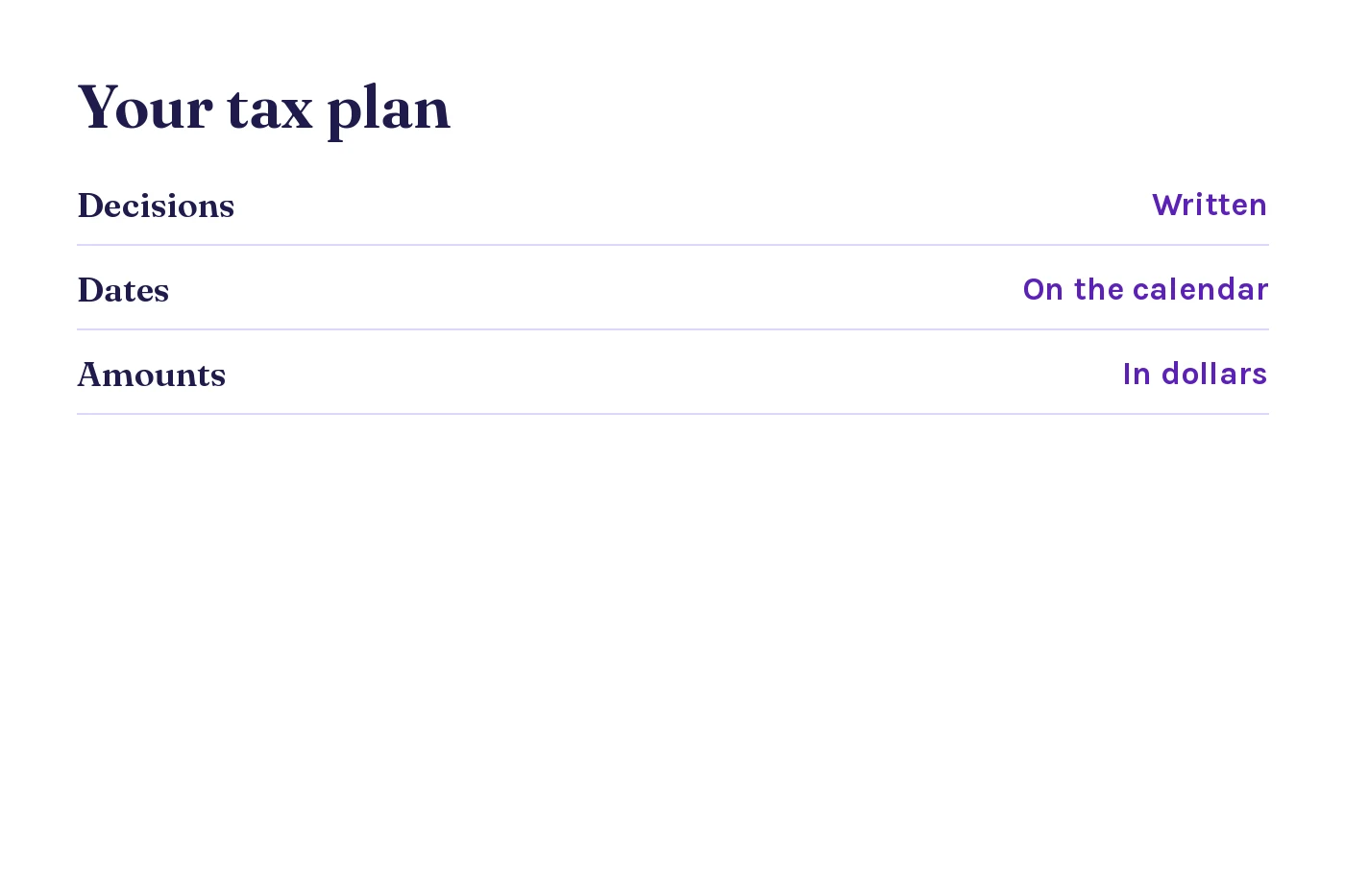
A good plan is short and specific. For each move it says what to do, how much, and by when. A typical plan for an S corp owner might read: salary of $70,000 a year through payroll, starting January; 401(k) deferral of $1,000 a paycheck; accountable plan reimbursements each month; estimates of $3,000 on each of the four dates; a fourth-quarter review in October.
The plan also lists the moves that don't fit yet and what would change that, so you know when to look again.
How the plan stays current
A plan is only as good as the numbers under it. We keep your books current each month in QuickBooks Online, check the plan at mid-year and in October, and change it when the business changes. Many owners like a short dashboard we build that shows profit to date against the plan.
What it's worth
That depends on your profit and on the moves you're not using yet. For an owner with steady profit who hasn't made an S corp election or opened a retirement plan, the first year of planning often finds several thousand dollars. For an owner who already uses most of the moves, the value is in keeping them right as the business grows. Our page on a worked tax planning example shows the math for one made-up owner. On the free call, we look at yours.
Who does the planning here
Steven Palmieri is a Tax CFO, also called the Entrepreneur's CFO. The same practice keeps your books, builds the plan and prepares the return, so the plan and the return use the same numbers. Read more on about Steven Palmieri.
Questions about tax planning
How often do we meet? Usually at the start of the year, at mid-year and in October, plus whenever something big changes. Clients on a retainer can ask a question any time.
Is the first call really free? Yes. It's 30 minutes, and there's nothing to sign. If you want help after that, you see the price before any work starts.
Want a tax plan for your business?
Tell us what the business does and what you'd most like the plan to cover.
You will be talking to the Steven Palmieri practice.